

Ubuntu: an interconnected existence
Or, what a clown taught me about the human condition
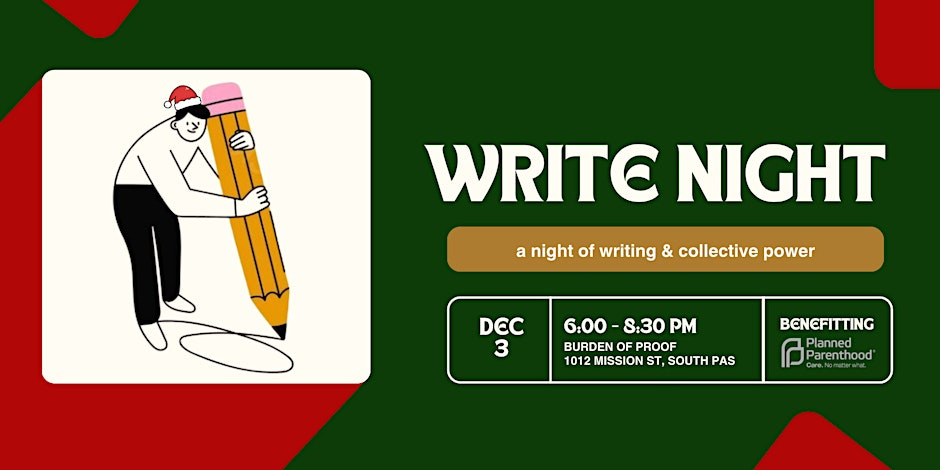
Hey! Need some butt-in-chair time? Krystie Yen and I are co-hosting another Write Night at Burden of Proof in Pasadena. Join us for a night of community, creativity, and collective action. This time, we’re raising funds for Planned Parenthood Advocates of Pasadena and San Gabriel Valley. Sign up here.
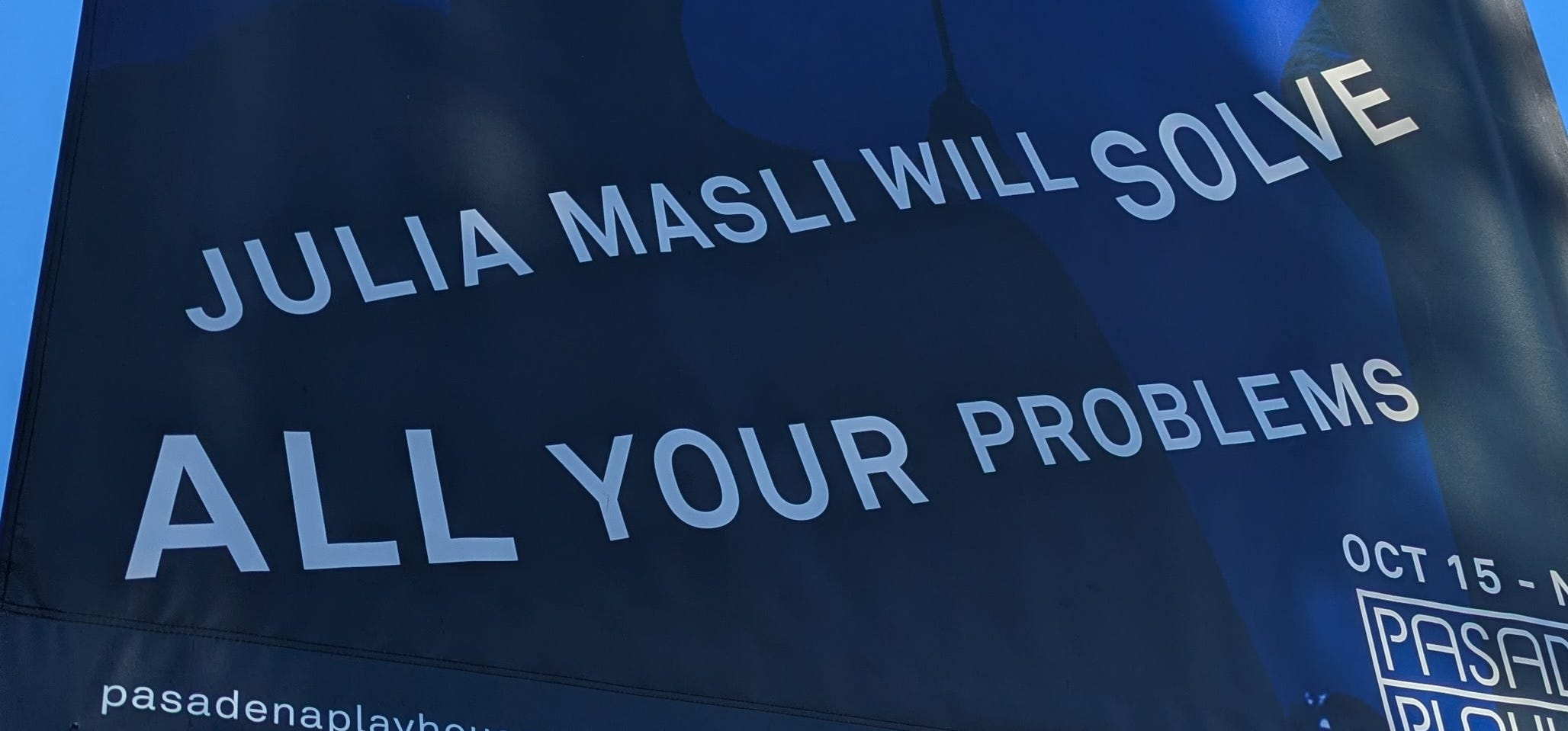
I’ve got problems. My eyesight is getting worse. The book I’ve been writing is a total slog. Two people I loved very much passed away recently, and it still doesn’t feel real.
Did I mention my eyesight?
Don’t worry. This isn’t some feel-good post about how life sucks and a gratitude list will fix everything. Although…if I were going to make a gratitude list, I would put ha ha ha ha ha ha ha at the top of it.
A couple of weeks ago, desperate to get out from under a pile of Legos and do something with another grown-up, I went with my sister-in-law to see a one-woman show — one that I knew next to nothing about, aside from the blurb I read on the website:
“All Julia Masli wants to do is solve people’s problems and win the Nobel Peace Prize, but this plan keeps going wrong as she continually wins prizes for comedy.”
Sounded fun. We got to the theater. The lights dimmed, the show started. Then, this woman — dressed like some kind of space alien, complete with a gold mannequin leg for an arm — made her way through the crowd then onto the blue-lit stage where she made weird noises and eventually thanked us for joining her on this “guided meditation.” Oh god, I thought, what did I drag us into?
But the show shattered my expectations. Julia Masli, a self-described “clown from Estonia,” goes into the audience dressed as some sort of, yes, alien-robot-space-creature-thing, and asks people for their problems. That night, people’s problems ranged from a bad breakup to writer’s block to caring for a father recently diagnosed with Parkinson’s. The whole show is improvised and based on each audience’s unique response.
When asked for a problem, one attendee admitted, “I don’t have friends,” as his voice cracked. Julia asked his name — then introduced him to someone else in the audience she knew with that name: the sound guy. “Exchange numbers,” she said. “You should hang out.” It was hilarious, serendipitous, and sweet. By the end of the show, a group of grieving strangers danced together while ABBA played.
It almost felt too good to be real, but it was. Which is kind of the definition of magic.
It’s hard to imagine that every show is different, because it’s hard to imagine the show I saw going any other way than the way it did. It wasn’t a one-woman show at all, it was a collective creation that, by the end, left me laughing, crying, and contemplating human existence all at once. Afterwards, my sister-in-law and I were stunned, trying to find the right words for what we’d just experienced. Even now, describing it here, doesn’t do justice to how weird and cool it actually was.
If you’re in the D.C. area, you should absolutely go check it out, because there’s a good chance you will be thinking about it for a long time after experiencing it yourself. I’m still thinking about it now. Weeks later, I’ve realized there is indeed a word for what I felt in that room: ubuntu.
I’ve avoided writing about ubuntu because it seems like an unstranslatable word that’s become so familiar, it’s no longer untranslatable. It’s been explained so much that it’s become flattened, and so it’s almost hard to recognize it when you feel it.
Ubuntu is a Nguni Bantu term that loosely translates to “humanness” and points to a philosophy of interconnectedness: the idea that there’s some universal bond connecting people and the world. It’s often translated as “I am because we are,” and used as a shorthand for describing the importance of community.
But like all untranslatable words, there’s something a little bit magical about it, too.
The philosophy of interconnectedness is not just some neat idea about kindness and community. The idea is, you are a person through other people. So, yes, it’s about community, solidarity, and supporting your neighbor. But it also seems to describe a somewhat radical idea: that existence is dependent on those around us. As one article puts it:
“...in Southern African traditional thought, being is understood in the communal, physical and spiritual sense. Thus, a human being is always in communion with other human beings as well as with the spiritual world.”
In ubuntu thought, existence is deeply relational — our identities are shaped by others. It’s an idea that’s similar to the Tagalog word Kapwa. BJ Gonzalvo writes:
“Many indigenous Tagalog words, especially those that have lasted through colonial and post-colonial times, are simply untranslatable. ‘Kapwa’ is one of those important indigenous words… The core value of kapwa, our shared humanity, is a cultural treasure that Filipinos willingly share, and must share, with all of humanity. No matter how loud and more pronounced the messages of individualism and self-ism get today, our need to recognize our interconnectedness, interdependence, and belonging runs deep in our human DNA.”
In the theater that day, it wasn’t just a clown solving problems. Somehow, all of it came together in a way that felt bigger than our individual little worlds. I could see myself in everyone else’s problems and anxieties, laughing at heartbreak and grief, cheering through writer’s block, finding joy in the mess of being human. It was healing, I guess, but it’s not like it made my own problems and anxieties disappear. If anything, it made me think about them more (“what will I say if she brings the mic to me?”). But it also made me think that maybe the beauty of being human, if it’s beautiful at all, isn’t in the absence of struggle, but in the way struggle can, and maybe should, connect us. For Julia Masli “ubuntu” isn’t just a metaphor. It’s the entire premise of the show, and I’m still floored that I got to experience it. Someone give this woman a Peace Prize already.
From the archives
The Imaginative Powers of a Brain on Autopilot (The Cut): You’re in the shower, or you’re brushing your teeth, or you’re blow-drying your hair. Suddenly, brilliance strikes.
Share-worthy
You Are a Toddler Asking Too Many Questions. Please Refer to This Flowchart. I wrote this piece in a humor writing workshop led by the amazing Luke Burns and got it placed in The Belladonna!
I worked on this Hidden Brain episode about how our biggest dreams, goals, and ambitions don’t just need passion —they need plumbing.
Girl in a Forest. Treat yourself (or someone else!) to this gorgeous book of poetry by my friend and neighbor Elline Lipkin.
Parents Have Feelings, Too. If you’re a parent, you need this book. Hell, if you are a human being with emotions, you need this book. It’s like a guidebook for navigating your Big Feelings, and while I want to recommend it to every parent I know, I would have benefitted from it long before becoming a parent.
Beautiful as always! You know I love your storytelling 😌