

Miunjeong: A 'hateful affection'
When the going gets tough, the tough...become besties?
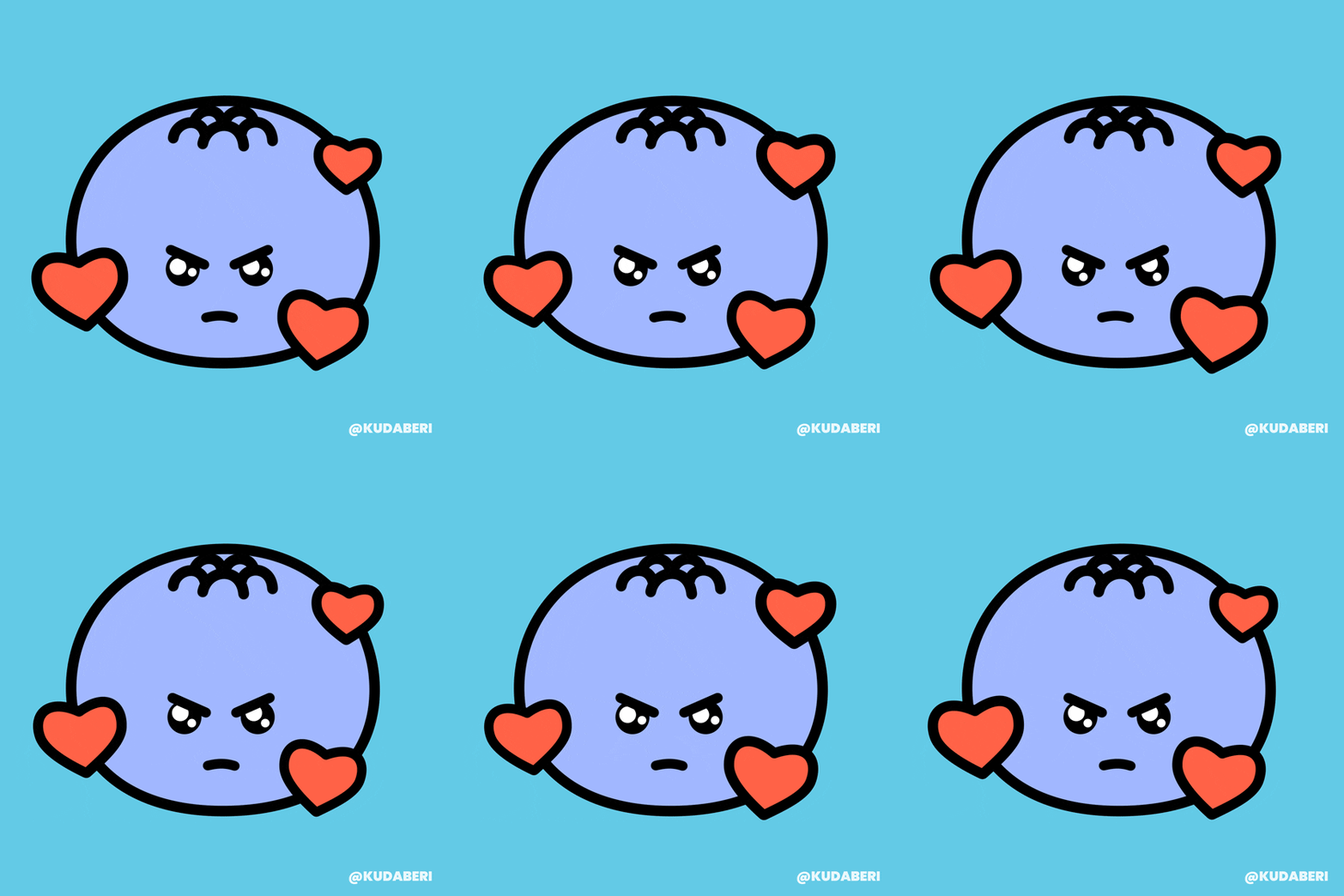
Miunjeong (Korean)
A cool thing about writing this newsletter —a newsletter dedicated to untranslatable words—is that when friends, family, and readers come across these words in the wild, they like to send them my way. A friend recently tipped me off to the Korean word miunjeong (미운정). It loosely translates to something like, “hateful affection,” two words that could not feel more opposed to each other, which is maybe why I felt immediately drawn to it.
The root of the word, “jeong,” is itself somewhat untranslatable. It describes the deep emotional connection that can form between people but also between animals or even objects. It’s been called a “Korean we-ness” or a kind of collectivism. It seems somewhat similar to the Bantu word ubuntu: “I am because we are.”
Miunjeong is a specific flavor of jeong. In English, it might read something close to a “love-hate relationship,” but miunjeong seems to go a bit deeper than that. Some say it describes the rocky relationship you might have with a rival or an in-law or a sibling. Others describe it as “a closeness that derives from unpleasant or negative experiences.” Ever bonded with an unlikely colleague in a toxic work environment? Or felt a strange kinship with a curmudgeonly traveler after a two-hour flight delay? You might have felt miunjeong.
Lucy Hyekyung Jee at Yonsei University put it this way:
“In those relationships, people have two opposite kinds of jeong, called miunjeong (미운정; jeong from hatred) and gounjeong (고운정; jeong from love). When people spend time together, and especially undergo turmoil together, they encounter both the good and the bad sides of each other, and they can come to understand each other deeply over time and develop sympathy and even a feeling of shared humanity.”
Miunjeong reminds me of the idea that “misery loves company.” When we go through something unpleasant, why is it oddly comforting to have other people in the same boat? I don’t think it’s that we want to share the pain, exactly. It's more that having company makes it more bearable. Hard things are harder in isolation. Miunjeong seems born from the same idea. Tough times can remind us of our humanity, and they can also forge bonds we might not expect.
Shareworthy
I worked on “Forget About It!” a Hidden Brain episode about forgetting and how we think of forgetting as a deficit of memory, when actually, it’s a crucial part of it.
I was struck by philosopher Ruth Chang’s TED Talk on How to Make Hard Choices, and how we approach these choices with a scientific mind when some things can’t be measured this way.
Devon Price’s book, Laziness Does Not Exist looks at the psychology behind the “laziness lie” and how it permeates both our everyday lives and broader social systems. It goes beyond the usual “rest is actually good for productivity” message, too. “The Laziness Lie wants us to believe that the solution to every social problem is casting aside your grievances and getting to work.”
A paper: “Toddlers Learn Best After Experiencing Impossible Events.” I can remember the feeling of having my mind blown as a kid, then following my curiosity to figure out what was really going on. I think much of my adult life has been spent chasing that feeling. Which is maybe why I became a journalist?
From the archives
How Thinking Like a Little Kid Can Keep You Sharp as You Age (The Cut)
This week’s soundtrack
A colleague and friend put together a birthday playlist for me and I can’t stop listening to this song.
Great post as always!
A bit difficult to understand, thanks for explaining.